|
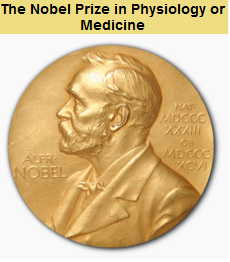
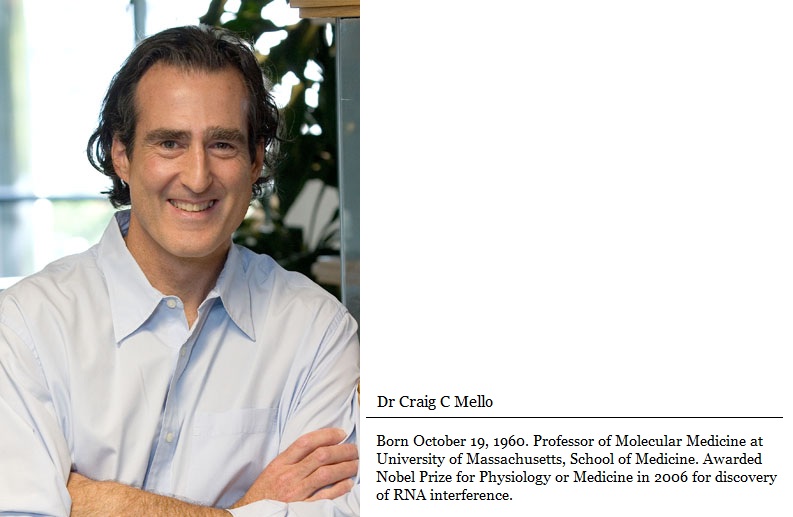
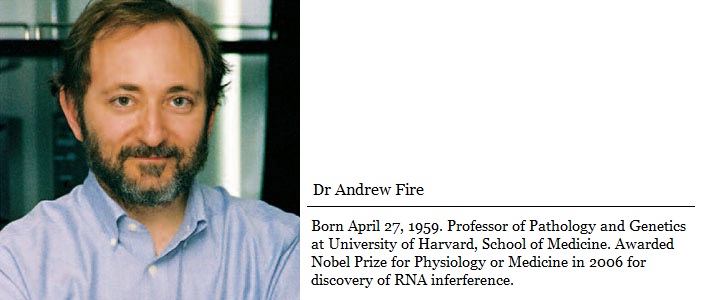
On the path of discovery... In 1998, an exciting scientific field emerged which has profoundly shared the current direction of biomedical research [3]. RNAi is a natural process that cells may use to turn down or silence activities of a particular genes. Discovered in 1998, RNAi has taken the biomedical community by storm. Researchers quickly capitalized on the discovery and developed RNAi into a powerful research tool that is not used in thousands of labs worldwide [49]. RNAi was first noticed in petunias, when plant biologists attempted to deepen the flowers' purple colour by introducing a pigment-producing gene. However, instead of intensifying the colour, the gene suppressed it. The resulting flower had white patches or were completely white [3]. History and Origin of the concept of RNAi In 1998, Andrew Fire, Craig C Mello and co-workers discovered a remarkable mechanism that permits eukaryotes to silence specific mRNA molecules. When they began their studies, it was known that injecting sense or antisense RNA into C. elegans blocks specific gene expression and that inhibition persists well into the next generation. This persistence seemed inconvenient with the fact that cells rapidly degrade single-stranded RNA They suspected that the single-stranded RNA molecules such as mRNA molecules were biologically active. They decided to test their hypothesis by studying the expression of a non-essential myofilament gene in C. elegans after injecting the worm with a 742 nucleotide long sense strand, its complementary antisense strand and the double-stranded RNA formed by annealing the sense and antisense strands. The double-stranded RNA was about 100-fold more effective in blocking myofilament gene expression that was either single-stranded RNA. Such sequences specific gene silencing by double-stranded RNA is termed RNA Interference [5]. The Nobel Recognition... In 1998, Dr Mello and Dr Fire published a paper in the journal Nature detailing how RNA interference can subvert this process - effectively shutting specific genes down. The pair of Americans won the coveted Nobel Prize in medicine or physiology for 2006 for their ground-breaking discovery of selective silencing of genes using dsRNA. The finding has revolutionized genetics while offering new insights into cellular behaviour and energized medical research. The award for RNAi came years earlier than many expected and some, including Fire, believe that others could have shared the prize. "This year's Nobel Laureates have discovered a fundamental mechanism for controlling the flow of genetic information" - The Nobel citation, issued by Sweden's Karolinska Institute [47]. "It is very unusual for a piece of work to completely revolutionalize the whole way we think about biological processes and regulation, but this has open up a whole new field in biology" - Prof. Nick Hastie, director of Medical Research Council's Human Genetics Unit [49]. "It affirms the importance of basic fundamental research, which often yields new insights into human biology. Their discovery is ready unfolding in new directions that may translate into discoveries of new diagnostic and therapeutic approaches for a variety of human disorders"- Philip Pizzo, MD, dean of the School of Medicine, Stanford University [50]. "It's one of the most well-deserved Nobel prizes ever given" - Phillip Zamore, co-worker of Dr Mello, Univarsity of Massachusetts [51]. Know more about RNA Interference by the maestros themselves!
Downloads | Glossary | References | Contact © 2012, Saie Mogre. All Rights Reserved. |